Threnody for Sara (in-progress)
song cycle for high voice, piano
Even To-Day
Age
Secret Treasure
Strange Victory (4’)
Deep in the Ages (In Memory of Vachel Lindsay)
All That Was Mortal
Moon’s Ending (2’)
Last Prelude
Lines
Since Death Brushed Past Me
To the Sea
There Will Be Rest (5’)
Media
Note
This cycle emerged froma commission by my good friend Maximillian Niedziejko, a fabulous tenor as well as conductor, to set the poem “Strange Victory” by 20th century American poet Sara Teasdale (the firest-ever winner of the Pulitzer Prize in Poetry in 1918) as an art song. I was immediately struck by the poem, and after then reading the entire collection the poem was published in as well as reading about Teasdale’s life I immediately began conceiving of a much larger work.
Sara Teasdale took her own life in 1933, having organized the collection of poems titled “Strange Victory” after the titular poem beforehand which was published posthumously. After my own biographical research into Teasdale’s life, I beleive that many of the poems of this collection are in many ways auto-biographical. The dissolving of her marriage, the suicide of fellow poet, close friend, and former lover Vachel Lindsay just two years before her own, her fears of an impending stroke due to spasms in her hand, the list of connections between her final poems and final years continues. The final poem of the collection, There Will Be Rest, is widely believed to be her suicide note.
This cycle is my attempt to depict the final years of Sara Teasdale’s life through settings of her final poetic works; a testament to the singular power and beauty of her poetry and exploration of mental health, as despite the nearly one hundred years that separate us from Sara Teasdale the mental struggles she experienced are still shared by countless others today.
Text
Poetry by Sara Teasdale
I. Even To-Day
What if the bridge men built goes down,
What if the torrent sweeps the town.
The hills are safe, the hills remain,
And hills are hapy in the rain;
If I can climb the hills and find
A small square cottage to my mind,
A lonely but a cleanly house
With shelves too bare to tempt a mouse,
Whatever years remain to me
I shall live out in dignity.
II. Age
Brooks sing in the spring
And in the summer cease;
I who sang in my youth
Now hold my peace;
Youth is a noisy stream
Chattering over the ground,
But the sad wisdom of age
Wells up without a sound.
III. Secret Treasure
Fear not that my music seesm
Like water locked in winter streams;
You are the sun that many a time
Thawed those rivers into rhyme,
But let them for a while remain
A hidden music in my brain.
Unmeaning phrase and wordless measure,
That unencumbered loveliness
Which is a poet’s secret treasure
Sings in me now, and sings no less
That even for your lenient eyes
It will not live in written guise
IV. Strange Victory
To this, to this, after my hope was lost,
To this strange victory;
To find your with the living, not the dead,
To find you glad of me;
To find you wounded even less than I,
Moving as I across the stricken plain;
After the battle to have found your voice
Lifted above the slain.
V. Deep in the Ages (In Memory of
Vachel Lindsay)
“Deep in the ages",” you said, “deep in the ages,”
And, “To live in mankind is far more than to live in a name.”
You are deep in the ages, now, deep in the ages,
You whom the world could not break, nor the years tame.
Fly out, fly on, eagele that is not forgotten,
Fly straight to the innermost light, you who loved sun in your eyes.
Free of the fret, free of the weight of living,
Bravest among the brave, gayest among the wise.
VI. All That Was Mortal
All that was mortal shall be burned away,
All that was mind shall have been put to sleep,
Only the spirit awake to say
What the deep says to the deep;
But for an instant, for it too is fleeting—
As on a field with new snow everywhere,
Footprints of birds record a brief alighting
In flight begun and ended in the air.
VII. Moon’s Ending
Moon, worn thin to the width of a quill,
In the dawn clouds flying,
How good to go, light into light, and still
Giving light, dying.
VIII. Last Prelude
If this shall be the last time
The melody flies upward
With its rush of sparks in flight
Let me go up with it in fire and laughter,
Or let me drown if need be
Lost in the swirl of light
The violins are tuning, whimpering, catching thunder
From the suppressed dark agony of viols—
Once more let heaven clutch me, plunge me under
Miles on uncounted miles.
IX. Lines
These are the ultimate highlands,
Like chord on chord of muisc
Climbing to rest
On the higest peak and the bluest
Large on the luminous heavens
Deep in the west.
X. Since Death Brushed Past Me
Since Death brushed past me once more to-day,
Let me say quickly what I must say:
Take without shaem the love I give you,
Take it before I am hurried away.
You are intrepid, noble, kind,
My heart goes to you with my mind,
The plummet of your thought is long
Sunk in deep water, cold with song.
You are all I asked, my dear—
My words are said, my way is clear.
XI. To the Sea
Bitter and beautiful, sing no more;
Scarf of spindrift strewn on the shore,
Burn no more in the noon-day light,
Let there be night for me, let there be night.
On the restless beaches I used to range
The two that I loved have walked with me—
I saw them change and my own heart change—
I cannot face the unchanging sea.
XII. There Will Be Rest
There will be rest, and sure stars shining
Over the roof-tops crowned with snow,
A reign of rest, serene forgetting,
The music of stillness holy and low.
I will make this world of my devising
Out of a dream in my lonely mind,
I shall find the crystal of peace,—above me
Stars I shall find.
XII. There Will Be Rest
There wiill be rest, and sure stars shining
Over the roof-tops crowned with snow,
A reign of rest, serene forgetting,
The music of stillness holy and low.
I will make this world of my devising
Out of a dream in my lonely mind,
I shall find the crystal of peace,—above me
Stars I shall find.
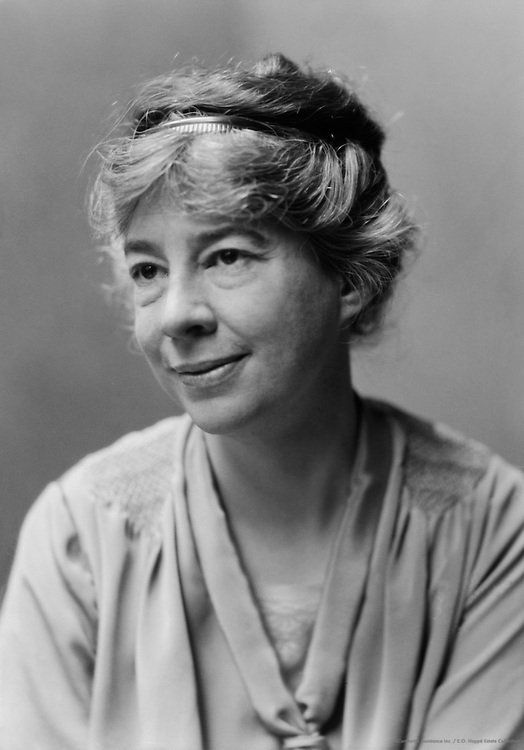

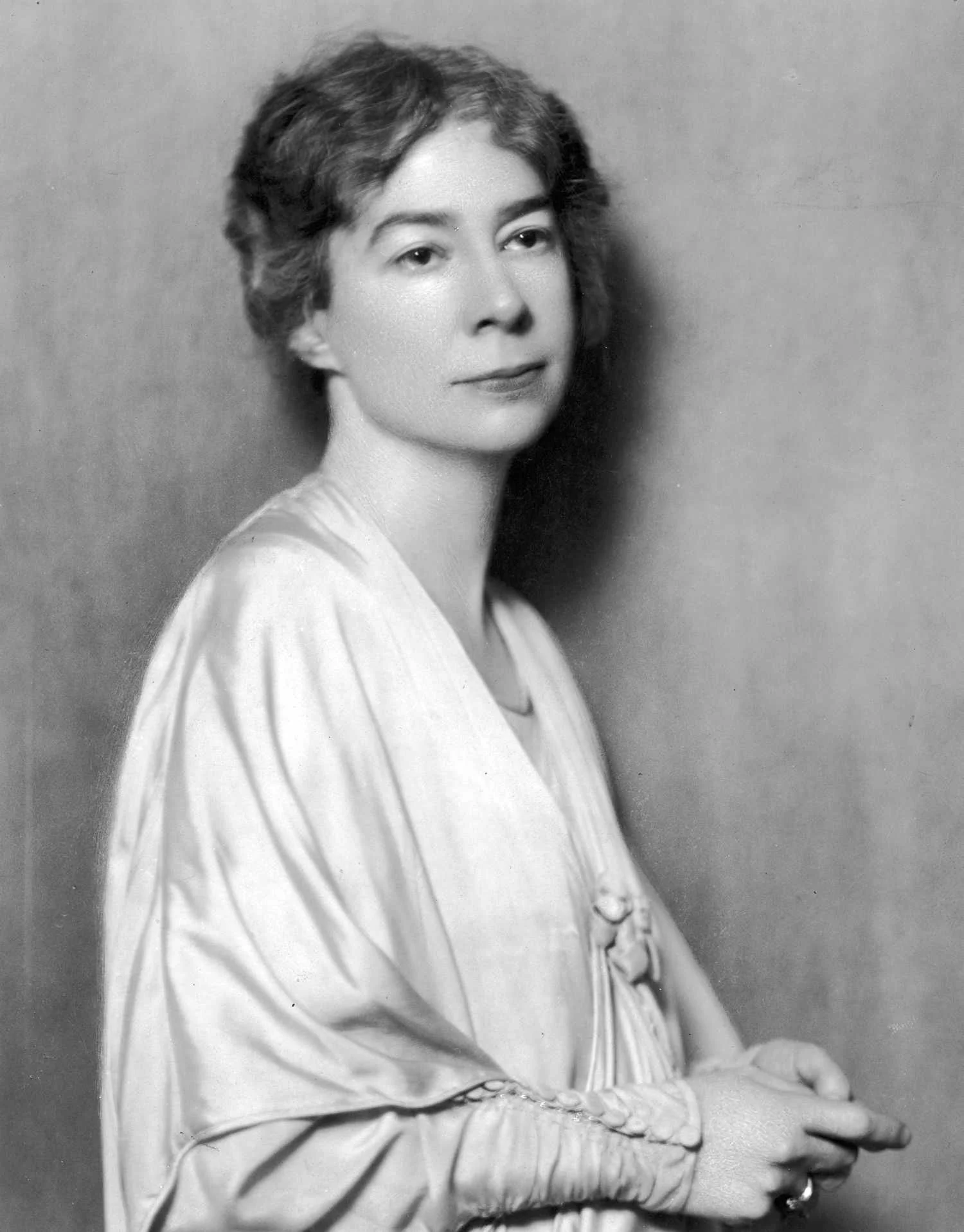
Photo:
Sara Teasdale in 1907, the year she published her first poetry collection: Sonnets to Duse and Other Poems
Photo:
Sara Teasdale in 1925
Photo:
Sara Teasdale in 1919